Supported by

ERC

Following the footprints of biotechnology in Munich

The datasets that our project has collected on submissions and publications of DNA sequences documented Munich as a central institution across the three species we are investigating: Homo sapiens, the pig Sus scrofa and the baker and brewer’s yeast Saccharomyces cerevisiae. The Ludwig-Maximilians University of Munich (LMUM), the main higher education provider in the city, featured consistently among the top co-authors of articles reporting new yeast, human and pig sequences for the first time in the scientific literature. This leadership position seemed to be especially strong between the late 1980s and mid-1990s, the early years of genomics research. As historians, we were incredibly curious to learn about the research projects and institutional infrastructure underlying our data, especially given that Munich does not feature prominently in the historiography of biotechnology and genomics. A workshop organised by the Historical Seminar of the LMUM to which one of us was invited provided the opportunity to reconstruct these sequencing practices through oral histories and archival research in Munich.

The workshop was organised by the project Cooperation and Competition in Science, led by Kärin Nickelsen at LMUM and which also involves the Deutsches Museum, the Institute for Contemporary History and the University of Jena. Two of the project’s strands explore the collaborative patterns and rivalries that have characterised the emergence of biotechnology and big biology. These lines of research have led to the creation of a vibrant community of PhD students who investigate the early years of the Human Genome Project. At the workshop, Dana von Suffrin and Marina Schütz presented on the history of the Human Genome Organization and the transition from the worm C. elegans to the human genome as objects of large-scale mapping and sequencing techniques. Alexander von Schwerin and Magnus Altschäfl also delivered informative talks on the creation of regional biotechnology clusters by the German Federal Government in the early-to-mid 1980s, and the decision to locate one of them in Martinsried, a small town on the outskirts of Munich and home of the Max Planck Institute of Biochemistry (MPI-B). These presentations were accompanied by keynote lectures delivered by international guests, such as Doogab Yi and Soraya de Chadarevian.

Martinsried was, accordingly, the main site of the historical research I conducted during my visit to Munich. The MPI-B holds annual reports that enabled me to follow, year by year, the design of an institutional architecture to favour the rise of the then novel recombinant DNA techniques. In 1984, the Munich Molecular Biology Research Centre, also called as the Munich Genzentrum, was created as an interdisciplinary space where promising early career researchers would hold their first independent position and scientists from different departments of the LMUM and MPI-B could use their shared facilities for the synthesis of peptides and oligonucleotides, as well as protein and DNA sequencing.

These gene centres were also established in Berlin, Cologne and Heidelberg. The Munich Genzentrum was chaired by Ernst-Ludwig Winnacker, who would later become the president of the European Research Council, and had among its research faculty Peter Hans Hofschneider, one of the founders of the pioneering biotechnology start-up Biogen. With the help of Altschäfl, I examined the early research reports of the Munich Genzentrum and realised that – from the early years – groups devoted to genetic research on yeast, human and livestock species of local interest, particularly the pig, had been established around the central technological facilities.

According to our dataset, the Munich Genzentrum was the seventh largest submitter of human DNA sequences between 1985 and 1995, and the LMUM the tenth submitter of yeast sequences between 1980 and 2000. Another institution created by the MPI-B in 1988, the Martinsried Institute for Protein Sequences (MIPS), features as the largest submitter of yeast sequences. The LMUM is also the twentieth most connected node in our network of over one thousand institutions having co-authored articles describing new pig sequences between 1990 and 2015.

While in Munich, I talked to Horst Domdey, who was part of the first breed of junior research leaders at the Genzentrum. During his tenure, he became one of the first users of an automatic DNA sequencer manufactured by the chemical multinational DuPont and participated in two large-scale genomic projects sponsored by the European Commission, the Yeast Genome Sequencing Project and the Human Genome Analysis Programme. His participation in the former, yeast project, was conducted in collaboration with another unit at LMUM, the Institute for Physiological Chemistry. In that institute, now called the Adolf-Butenandt-Institut, another researcher, Horst Feldmann, led the sequencing of chromosome II of yeast as part of his investigation of transfer RNA and gene expression in a single-celled microorganism.

Both Domdey and Feldmann would send their sequences to the MIPS for quality control. This institution had been designated by the European Commission as the bioinformatics coordinator that would receive the sequences from all the laboratories involved and channel their submission to public databases. Werner Mewes and Karl Kleine, PI and researcher at MIPS, explained to me that while their first target was protein sequences, during the 1990s they shifted to DNA as the major focus of the European genome projects. The origins of MIPS are connected to the strong protein chemistry tradition at MPI-B, where Pehr Victor Edman, the inventor of the first automatic protein sequenator, finished his career.

The final piece in the Munich biotechnology jigsaw was MediGene, a start-up company that was created in the mid-1990s. This company derived from the shared sequencing facility at the Genzentrum and provided corporate services in both DNA sequencing and medical genomics. During an oral history, the director of DNA analytics at MediGene, Brigitte Obermaier, recalled that the sequencing facility at the Genzentrum had from the onset been conceived as a seed for future commercial developments. The sequencing services became the most productive business line at MediGene, which in the late-1990s was rebranded as Medigenomix and has since served the necessities of laboratories from the pharmaceutical industry. Medigenomix was acquired by the laboratory services multinational Eurofins and is now part of its commercial offer.

In spite of their strengths, neither LMUM nor MPI-B considered the establishment of a genome centre in Munich. Other large-scale sequencing facilities adopted this institutional form during the 1990s, and actively participated in the Human Genome Project and other international sequencing initiatives. The Munich institutions, in contrast, preferred to use their sequencing skills to address existing research necessities, internal at first and then providing commercial services to the European Commission, pharmaceutical laboratories and other customers. This is why the visitor to Martinsried is welcomed by a company incubator, now called the IZB, rather than a genome centre. By studying this experience, it is possible to connect the histories of biotechnology and genomics, and show that large-scale sequencing technologies can be productively used in other objectives, apart from completing whole genomes.
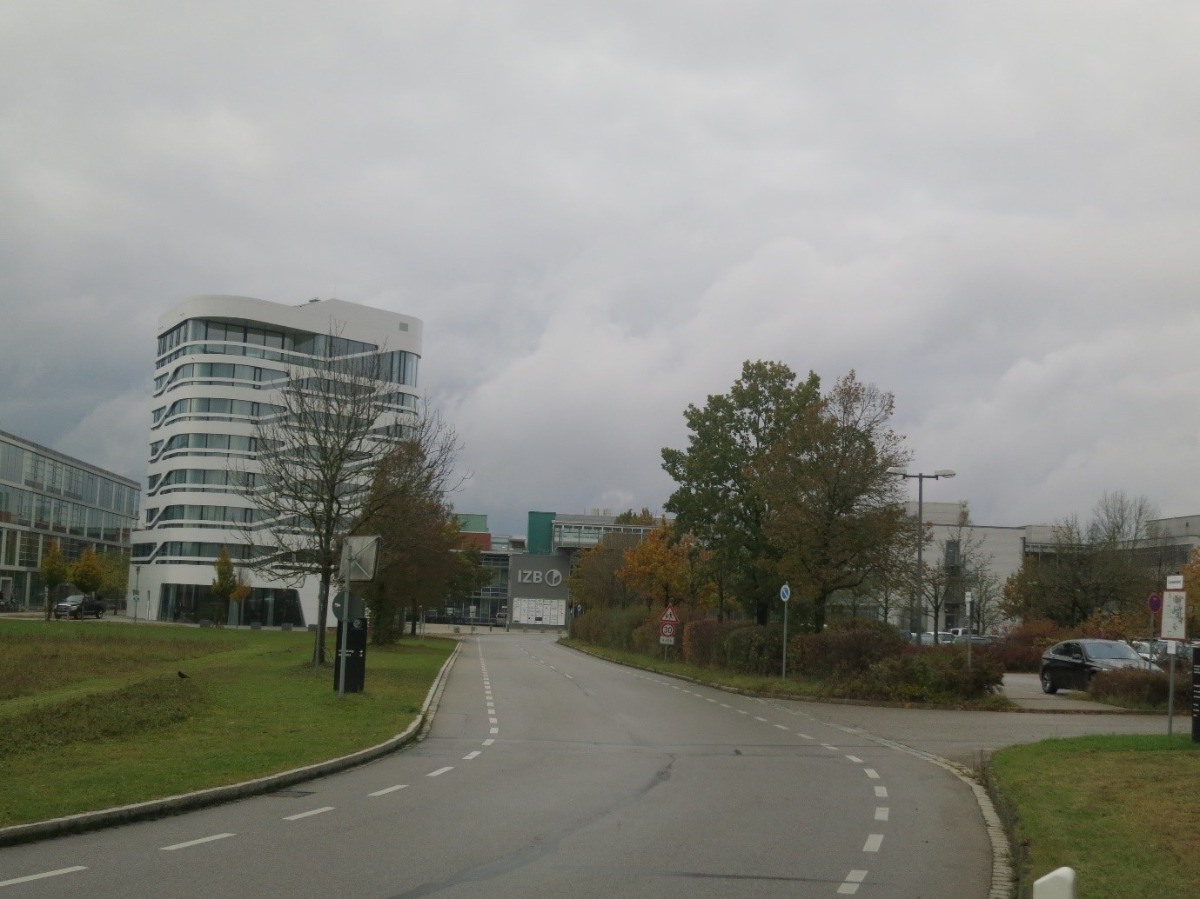
The Fördergesellschaft IZB or company incubator where MediGene and other biotechnology start-ups in Munich were born.

The Fördergesellschaft IZB or company incubator where MediGene and other biotechnology start-ups in Munich were born. It is located in Martinsried, the biomedical campus of the Ludwig-Maximilians University of Munich, a short walking distance from the Genzentrum and Max Planck Institute for Biochemistry

Latest Blog Posts

TRANSGENE project on (online) tour again

The Covid-19 pandemic substantially halted the dissemination activities of the TRANSGENE project. With the exception of some online events, most academic conferences were either cancelled or postponed until travel and lockdown restrictions were eased. Our research work, however, continued as we switched our oral histories online and devised mechanisms to … (Read more)


Investigating the barcoding of life

In the TRANSGENE project, the main focus has been on the history of genomics, focusing chiefly on the organisation of concerted projects based on DNA sequencing. However, throughout, spin-offs from genomics have been explored. TRANSGENE’s James Lowe began one such exploration with David Ingram of STIS (and formerly Regius Keeper … (Read more)


Exploring NHS England’s Genomic Medicine Service through PanelApp

By Jarmo de Vries The author of this blogpost is a PhD student co-supervised by the Principal Investigator and Senior Research Fellow of the TRANSGENE team. The preliminary findings of his doctoral research on the Genomic Medicine Service of NHS England square neatly with the historical trajectory that the TRANSGENE … (Read more)


Discussing datasets at the global digital history of science festival

Before the intervention of the coronavirus pandemic, we had planned to host a symposium discussing the development, use and re-use of the kinds of large datasets generated by the TRANSGENE project. This was to be held this summer at the British Society for the History of Science (BSHS) conference to … (Read more)


Website update to reflect project’s achievements

As we enter the last phase of the TRANSGENE project, we have updated our website to reflect the shifts in the way we have been thinking about and studying genomics research. At the outset of the project, we organised our work in terms of the species that individual members of … (Read more)


Project enters into its final phase

The TRANSGENE project has now entered into its last phase, which will run until the end of the grant, in September 2021. The main objective until the conclusion of the project is the submission of a monograph to Palgrave Macmillan provisionally entitled 'A History of Genomics across Species and Projects'. … (Read more)


Interpreting network and quantitative data in the TRANSGENE project

From the beginning of the TRANSGENE project, we have compiled datasets detailing DNA sequence submissions from different institutions, lists of publications derived from those sequence submissions, conducted oral history interviews and examined personal and institutional archives. As we have done these in parallel, each has aided us in our interpretation … (Read more)


Following the footprints of biotechnology in Munich

The datasets that our project has collected on submissions and publications of DNA sequences documented Munich as a central institution across the three species we are investigating: Homo sapiens, the pig Sus scrofa and the baker and brewer’s yeast Saccharomyces cerevisiae. The Ludwig-Maximilians University of Munich (LMUM), the main higher … (Read more)


New publication - 'Genetics without genes'

A new paper arising out of the collaborative phase of the TRANSGENE project, has now been published. 'Genetics without genes? The centrality of genetic markers in livestock genetics and genomics' is co-authored by James Lowe and Ann Bruce. It is based on close attention to the elucidation and use of … (Read more)


Genomics in Context: first major update

The first set of articles on new web resource 'Genomics in Context' have now been published: www.genomicsincontext.com This new website features articles from scholars of genomics Stephan Guettinger (London School of Economics), Miguel García-Sancho, Catherine Heeney and James Lowe (all University of Edinburgh). Additionally, there is a blog containing shorter … (Read more)


Project’s quantitative data available online

A main objective of our project is to combine oral histories, archival searches and other traditional methods for historical research with quantitative data, so that we can develop a new approach to the study of the history of genomics. Our quantitative data is now freely available online after more than … (Read more)


Pig Breeders' Roundtable

Every two years, academic researchers join scientists and representatives from leading pig breeding companies at the verdant campus of the University of Kent, just outside of Canterbury. The event, the Pig Breeders' Roundtable, has been held for over 40 years, and was until the last decade hosted at Wye College … (Read more)


Extracting value from digitizing microbes in Oslo – a ReDig workshop

Nothing about the city centre of Oslo would tell you that you’re in the same country as the sharp-edged fjords that characterise the north of Norway. Nothing directly, that is; indirectly, the city’s excellent public transportation, copious public sculptures, and other amenities speak to the wealth derived from oil and … (Read more)


Past and present of human genomics at the National Institutes of Health

The TRANSGENE project was invited to a workshop organised by the National Human Genome Research Institute of the United States (NHGRI) to explore both historical perspectives and present-day prospects of genomics research. The meeting gathered academic scholars and administrators involved in past and present NHGRI initiatives, such as the Human … (Read more)


Portraits of blue-skies research at Carlsberg Laboratory

Portraits of blue-skies research at Carlsberg Laboratory Claes Gausmann, yeast geneticist at Carlsberg Laboratory in Copenhagen, tells me that the problem with automating yeast research is akin to the problem with automating fly flipping as described by Jenny Bangham in her work on Drosophila stock centers. It should not be … (Read more)


Turning research organisms on their head at 4S in Australia

Rachel Ankeny and Sabina Leonelli have done a great deal to shape and populate history and philosophy of science attention to model organisms through their joint work over the past two decades. At present, that work is continuing to play out in Ankeny's Australian Research Council-funded project “Organisms and Us: … (Read more)


Yeast as a model organism at Cold Spring Harbor Laboratory

As I scuffed my shoes on scattered tree branches, bits of broken asphalt, and varied road debris with fast-moving lorries and sports cars whizzing past my right shoulder, it occurred that one of the principle scientific advantages of Cold Spring Harbor Laboratory is isolation. While the laboratory campus is on … (Read more)


Panel on working with large datasets in the history of science - call for expressions of initial interest

Ahead of the formal call for papers for the 2019 British Society for the History of Science conference (which will be held in Edinburgh, 10-13 July), we would like to request expressions of interest in participating in a panel at the conference on the theme of working with large datasets … (Read more)


New publication: 'Sequencing Through Thick and Thin'

The first peer-reviewed publication arising from the TRANSGENE project has now been published online by the journal Studies in History and Philosophy of Biological and Biomedical Sciences. Entitled 'Sequencing through thick and thin: Historiographical and philosophical consequences', the paper by James Lowe details a more inclusive conception of DNA sequencing … (Read more)


TRANSGENE on European genomics

At the recent conference of the European Society for the History of Science in London, the TRANSGENE team organised a symposium chaired by Robert Bud on the crucial role of European transnational collaboration in the history of genomics. We argued that the narrative that equates genomics with human genomics, and … (Read more)


TRANSGENE goes to the Fringe

On 22nd August, TRANSGENE took part in the Edinburgh Festival Fringe, the largest arts festival in the world. As part of the ‘Cabaret of Dangerous Ideas’ strand, James Lowe presented a show entitled ‘Will Pigs Save Our Bacon?’ at The Stand’s New Town Theatre on George Street. The Cabaret of … (Read more)


The future of sustainable food production?

On July 18th, I attended a horizon-scanning workshop on food sustainability hosted by the Nuffield Council on Bioethics. The aim of the meeting was to scope out the challenges facing food sustainability over the medium and long-term, and to examine what biological research and innovation is being conducted to try … (Read more)


The Canadian chapter of the history of human genomics

Miguel Garcia-Sancho, PI of the TRANSGENE project and lead investigator of the human genome strand, visited Toronto and Montreal last April to conduct historical research and participate in an interdisciplinary workshop on medical innovation. He visited the archives of the University of Toronto Hospital for Sick Children and conducted oral … (Read more)


Exploring pig genetics in France

At the end of November, I followed in the footsteps of many of the pig geneticists whose work I have been researching, and visited the Jouy-en-Josas campus of the French Institut national de la recherche agronomique (INRA), just south of Paris. At there and other INRA sites in Paris itself, … (Read more)


Advisory Board Meeting and Second Phase of Project

First Advisory Board meeting The TRANSGENE team presented its first findings to an Advisory Board comprised by Stephen Hilgartner (Cornell University), Robert Bud (Science Museum, London), Michel Morange (University Paris 6 and Ecole Normale Superieure), Abigail Woods (King’s College, London) and Hans-Jörg Rheinberger (Max Planck Institute for the History of … (Read more)


The unusual pioneer of the Human Genome Project

When we think about prime-movers, proposing for the first time the idea of scientifically tackling the human genome, the usual suspects come to our mind: reputed biomedical Nobel Prize winners such as James Watson, Walter Gilbert or Renato Dulbecco, who formulated their grand idea in the front pages of Science, … (Read more)


TRANSGENE on tour

…at the British Society for the History of Science conference Amongst the sizeable Edinburgh contingent at the annual British Society for the History of Science conference, this year held in York, were representatives from the TRANSGENE project team. Miguel García-Sancho presented the progress on the yeast strand of the project … (Read more)


June events

The TRANSGENE project operates within the Science, Technology and Innovation Studies (STIS) subject group at the University of Edinburgh. This multidisciplinary affiliation, and association with the Institute for the Study of Science, Technology and Innovation (ISSTI) research network, enables us to discuss our work with researchers that have a wide … (Read more)


Classifying people, practices and institutions

Just as classifications of species, genes, stages of development, or macromolecules can shape research in biology, classification in the humanities and social sciences can condition our analyses. In the pig strand of the project I’m working on, classifying people, practices and institutions is necessary. My aim is to explain, so … (Read more)


The yeast telomeres

Writing the history of the yeast genome project starting from the end, more precisely the chromosome ends, can be an instructive exercise. Chromosome ends (telomeres) are specialised structures essential for chromosome maintenance and genome stability. As yeast telomeres are similar in structure and function to the telomeres of the other … (Read more)


Collaborating with the European Bioinformatics Institute (EMBL-EBI)

In March 2017, I am conducting a three-week visiting post-doctoral fellowship at the European Bioinformatics Institute (EMBL-EBI, Cambridge UK), for the bibliometric and “big data” strand of the project. I am collaborating with the EBI’s Literature Services to advance the project’s aims of mapping institutional networks in genomic sequencing initiatives … (Read more)


The history of pig genome research enters the matrix

In the TRANSGENE project we are committed to using approaches from different disciplines to make sense of the historical material, and to generate new data from which to form a picture of the genomic research. One of the key approaches is the use of quantitative methods, imported from the social … (Read more)


Tracing the history of European biotechnology in the HAEU

My week-long visit to the Historical Archives of the European Union (HAEU) in Florence has proved to be a remarkable opportunity for investigating the ‘behind the scenes’ of European biotechnology policies in the 1980s and 1990s. During my visit in Florence I mainly examined documents available in the Gordon Adam’s … (Read more)


Scientific archives and the history of genomics

In November 2016 Miguel Garcia-Sancho, James Lowe and I attended the Workshop on Scientific Archives organised by Anne Flore-Laloë, archivist at the European Molecular Biology Laboratory (EMBL) in Heidelberg. The meeting brought together tens of archivists from Germany, France, Switzerland, UK, US and Canada. The workshop presentations focused on best … (Read more)